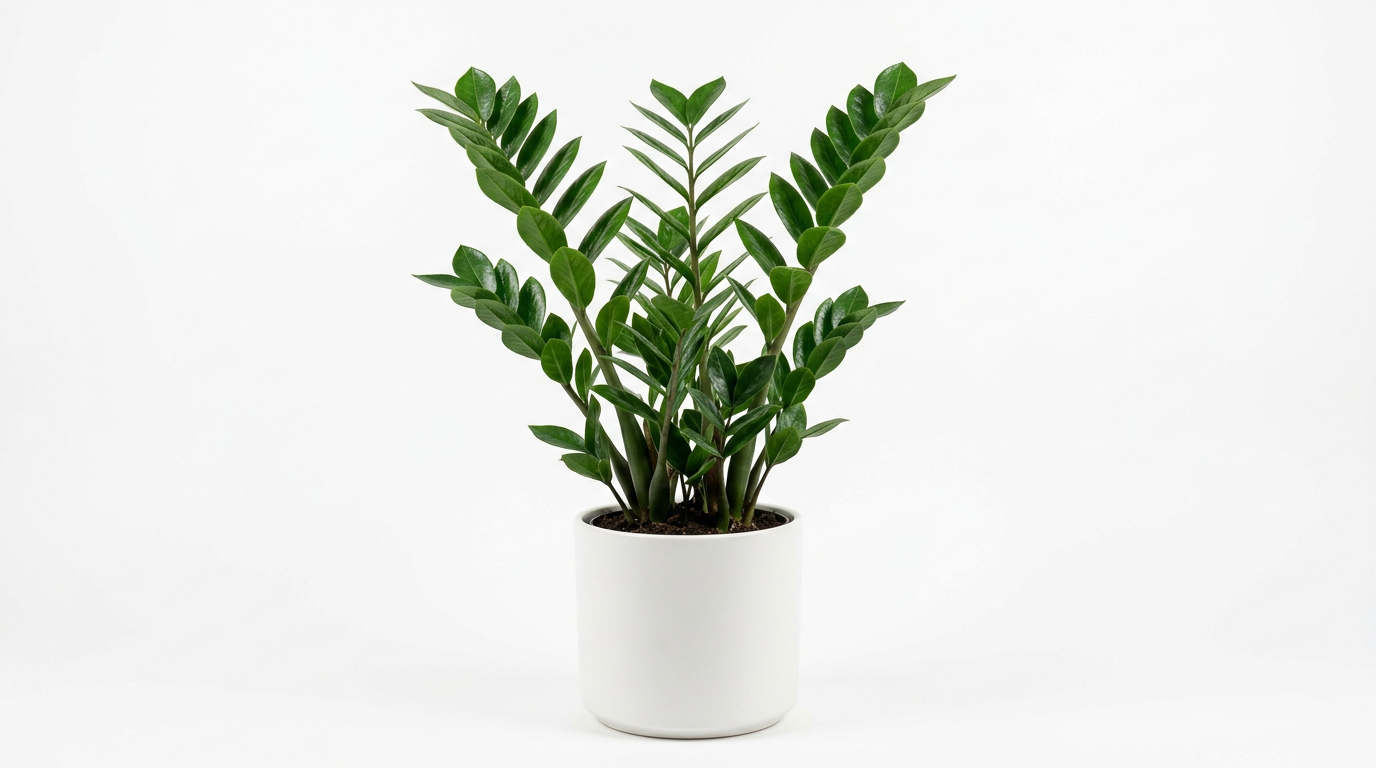
ZZ Plant
Very EasyZamioculcas zamiifolia
ZZ plants are virtually indestructible, with glossy wand-like stems and waxy leaves that thrive on neglect, low light, and minimal watering.
Light
Low to bright indirect light
Water
Every 2–3 weeks
Humidity
Low to average (40–60%)
Temperature
65–85°F (18–29°C)
Toxicity
Toxic to humans and pets
The ZZ plant is the houseplant world’s ultimate overachiever — armed with thick, arching stems lined with glossy, waxy leaves, it looks like it demands constant attention while actually thriving on complete neglect. Native to the drought-prone grasslands of East Africa, Zamioculcas zamiifolia stores water in plump underground rhizomes, giving it a near-indestructible resilience that makes it the go-to recommendation for beginners, frequent travelers, and anyone whose previous plants have met an untimely end. If you want a plant that looks lush and polished while you forget about it for weeks at a time, ZZ is your answer.
Quick Care Overview
| Care Factor | Requirement |
|---|---|
| Light | Low to bright indirect light |
| Water | Every 2–3 weeks |
| Humidity | Low to average (40–60%) |
| Temperature | 65–85°F (18–29°C) |
| Soil | Well-draining cactus/succulent or potting mix with added perlite |
| Fertilizer | 2–3 times per year during spring and summer |
| Toxicity | Toxic to humans and pets |
Light Requirements
ZZ plants are one of the most adaptable houseplants when it comes to light, comfortably tolerating conditions that would stress most tropicals. They grow fastest and look their glossiest in bright indirect light, but their real superpower is the ability to hold steady — and even push out new growth — in genuinely dim spots. The one thing they cannot handle is prolonged direct sun, which scorches those beautiful waxy leaves.
- Low light: ZZ plants tolerate low light better than almost any other houseplant. Growth slows considerably, but the plant stays healthy and holds its deep green color. They won’t thrive in a windowless room, but a few feet back from a north-facing window is perfectly fine.
- Bright indirect light: This is the sweet spot. Near an east- or west-facing window (or back from a south-facing one), your ZZ will produce new stems regularly and maintain the most compact, upright shape.
- Direct sun: Avoid more than an hour or two of direct afternoon sun. Prolonged direct exposure bleaches and scorches the leaves, causing yellow or brown patches that won’t recover.
Watering
ZZ plants are one of the most drought-tolerant houseplants in existence, thanks to their thick, potato-like rhizomes that hoard water underground. In most homes, watering every 2–3 weeks during the growing season (spring through summer) is about right — and you can stretch that to once a month in winter or in low-light conditions. The golden rule: let the soil dry out completely before watering again. When in doubt, skip the watering. A thirsty ZZ bounces back easily; an overwatered one is a much bigger problem.
Signs of overwatering: Yellowing leaves (the most common symptom), mushy or blackened stems at the soil line, and a soggy, foul-smelling potting mix. If you see these, hold off on watering immediately, check the roots for rot, and consider repotting into fresh dry mix.
Signs of underwatering: ZZ plants are remarkably slow to show drought stress — wrinkled or slightly soft stems are the earliest warning. By the time you notice, a thorough watering will almost always revive the plant fully within a day or two.
Popular ZZ Plant Varieties
The ZZ family has grown in recent years, with a few standout cultivars becoming popular in their own right.
| Variety | Key Trait |
|---|---|
| Raven ZZ (Z. zamiifolia ‘Raven’) | New leaves emerge bright green, then mature to a dramatic near-black — one of the most striking houseplants available |
| Zenzi ZZ (Z. zamiifolia ‘Zenzi’) | Dwarf/compact form with tightly packed, slightly curled leaflets — great for desks and small spaces |
| Lucky Classic ZZ | The original species; the large, arching wand-like stems that most people picture when they think “ZZ plant” |
Humidity and Temperature
One of the ZZ plant’s best qualities is its complete indifference to typical indoor humidity. It comes from semi-arid East African environments and handles the dry air found in most homes, offices, and apartments without complaint. A range of 40–60% humidity is perfectly fine, but ZZ will tolerate levels well below that — it genuinely doesn’t need misting, pebble trays, or a humidifier.
Temperature is similarly forgiving. ZZ plants are happiest between 65–85°F (18–29°C), which maps neatly onto the average home. The main thing to avoid is cold: temperatures below 45°F (7°C) damage the rhizomes, and frost is lethal. Keep ZZ away from cold drafts, air conditioning vents blowing directly on the plant, and unheated windowsills in winter.
Soil and Potting
ZZ plants need a well-draining mix above all else — sitting in wet soil is the fastest way to kill them. A cactus and succulent potting mix works well straight from the bag, or amend a standard potting mix with 25–30% perlite to improve drainage. The goal is a mix that drains quickly and doesn’t hold moisture for long.
Because ZZ rhizomes grow and expand over time, they eventually fill the pot and can even push up against the sides or crack a thin nursery container. Repot every 2–3 years in spring, moving up one pot size. Choose a pot with drainage holes — this is non-negotiable for ZZ plants. Terracotta pots are an excellent choice because they breathe and help the soil dry out faster between waterings.
Propagation
ZZ plants can be propagated two ways: the slow but satisfying method (leaf cuttings) or the fast and reliable method (rhizome division at repotting time).
- Leaf cutting in water or soil: Take a healthy leaf with its petiole (the small stem that attaches it to the main stem) and place it in a glass of water or push the base into moist perlite or coco coir. Keep it in a warm, bright spot out of direct sun. New rhizome development is very slow — expect 3–9 months before a small rhizome and baby shoots appear. Patience is essential with this method.
- Leaf cutting care: Change the water every 1–2 weeks to prevent bacterial growth. Once a small rhizome has formed and the first tiny shoots appear, pot the cutting up into a well-draining mix and treat it as a small ZZ plant.
- Rhizome division: When repotting an established ZZ, look for natural separation points between rhizome clusters. Use a clean, sharp knife to divide them, ensuring each division has at least one healthy stem and a good chunk of rhizome. Pot each division separately, water once lightly, and then treat the same as a mature plant. This method produces full-sized plants almost immediately and is far faster than leaf cuttings.
Fertilizing
ZZ plants are very light feeders — they evolved in nutrient-poor soils and genuinely don’t need much. Over-fertilizing can cause salt build-up in the soil and burned leaf tips. Feed just 2–3 times per year during the active growing season (spring and summer), using a balanced liquid fertilizer (such as 10-10-10 or 20-20-20) diluted to half the recommended strength. Skip fertilizing entirely in fall and winter when the plant’s growth slows. If your ZZ is producing new growth and looking healthy, you’re already doing enough.
Common Problems
Yellow leaves: The number one ZZ problem, and almost always caused by overwatering. Allow the soil to dry completely between waterings, check that your pot has drainage, and remove any yellowed stems at the base. If multiple stems are yellowing at once, check the rhizomes for rot.
Mushy stems at the base: A sign of root or rhizome rot from prolonged overwatering. Remove the plant from its pot, cut away any soft or blackened rhizomes with a clean knife, let the roots air-dry for a few hours, and repot into fresh dry mix. Hold off watering for a week or two.
Brown leaf tips: Usually caused by overfertilizing (salt burn) or, less commonly, very low humidity or tap water fluoride sensitivity. Flush the soil thoroughly with water to remove fertilizer build-up, reduce feeding frequency, or switch to filtered water.
Leggy growth / stems leaning over: A sign the plant isn’t getting enough light. Move it closer to a window with brighter indirect light. ZZ plants won’t grow compactly in very low light — they stretch toward available light sources.
Leaves losing their gloss: Dust accumulates on the waxy leaves over time, dulling their appearance. Wipe leaves gently with a damp cloth. Avoid commercial leaf-shine products, which can clog the pores.
No new growth: ZZ plants are naturally slow growers, but if yours has stalled for a full growing season, check for pot-bound rhizomes (time to repot), very low light, or root rot. In winter, no growth is completely normal.
Is ZZ Plant Toxic?
Yes — ZZ plants are toxic to humans and pets. All parts of the plant contain calcium oxalate crystals, which cause oral irritation, burning, swelling, nausea, and vomiting if ingested. This applies to cats, dogs, and children, so keep your ZZ out of reach of curious pets and little ones. The plant is also mildly irritating to skin for some people, so it’s a good habit to wash your hands after handling the stems or roots — especially when propagating or repotting. The toxicity is real but not typically life-threatening; still, contact your vet or poison control if ingestion occurs.
Once you understand ZZ’s one true need — dry soil between waterings — this plant will reward you with years of glossy, architectural beauty that looks like it requires expert care. It’s the rare houseplant that actually gets better when you leave it alone.