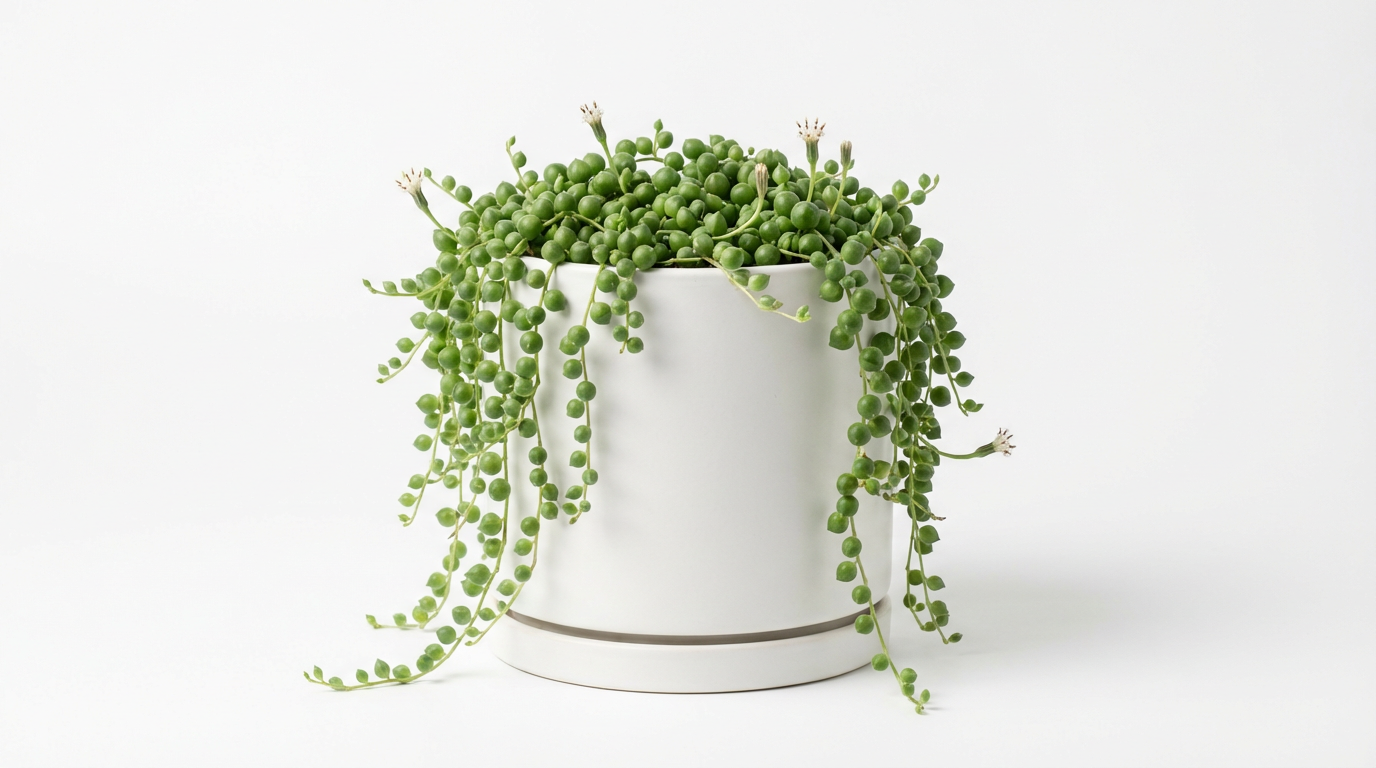
String of Pearls
ModerateCurio rowleyanus
String of pearls is a cascading succulent with bead-like spherical leaves that tumbles dramatically from shelves and hanging baskets — a collector's favourite.
Light
Bright indirect to some direct light
Water
Every 2 weeks
Humidity
Low (30–50%)
Temperature
60–75°F (15–24°C)
Toxicity
Toxic to pets
String of pearls (Curio rowleyanus, formerly Senecio rowleyanus) is one of the most dramatic succulents you can grow, sending long trailing strands of perfect, pea-sized spherical leaves cascading from shelves or hanging baskets. Those bead-like leaves are not just for looks — each one is a water-storage vessel evolved for the dry slopes of South Africa. It is a plant that rewards attentive care but punishes overwatering swiftly, making it a genuinely satisfying challenge rather than a set-and-forget houseplant.
Quick Care Overview
| Care Factor | Requirement |
|---|---|
| Light | Bright indirect to some direct light |
| Water | Every 2 weeks |
| Humidity | Low (30–50%) |
| Temperature | 60–75°F (15–24°C) |
| Soil | Fast-draining succulent or cactus mix |
| Fertilizer | Once or twice during the growing season, diluted to half strength |
| Toxicity | Toxic to pets |
Light Requirements
String of pearls needs more light than many people expect. In its native habitat it scrambles across bright, sun-exposed ground, so indoors it performs best in a south- or east-facing window where it gets several hours of bright light — including a little gentle direct sun. Without enough light, the plant tells you immediately: the strands thin out, the pearls space farther apart, and the whole plant loses that lush, dense rope-like appearance.
- Low light: The strands stretch and etiolate rapidly, pearls space out and shrink, and the plant becomes thin and sparse within a few weeks. Recovery is slow.
- Bright indirect light: The sweet spot for most indoor situations — pearls stay plump and compact, growth is steady, and the risk of leaf scorch is minimal.
- Direct sun: A few hours of morning sun is genuinely beneficial and helps maintain pearl density. Harsh afternoon sun, especially through a south-facing window in summer, can scorch the pearls and cause brown, papery patches on the sun-facing side.
Watering
String of pearls is a succulent, and it demands to be treated like one. The soak-and-dry method works well: water thoroughly until it drains from the bottom, then let the soil dry out completely before watering again. In spring and summer this typically means watering every two weeks; in fall and winter, reduce to once a month or even less. The pearls themselves act as a guide — plump and round means the plant is well hydrated, flat or shriveled means it is thirsty.
The single most common cause of string of pearls death is overwatering. Root rot sets in quickly in wet soil, and by the time you see symptoms above ground the roots may already be gone. When in doubt, wait a few more days.
Signs of overwatering: Pearls become soft, mushy, or translucent and may turn yellow or brown. The soil stays wet for more than two weeks. Strands may collapse at the base as rot moves up. Act quickly — remove the plant from its pot, trim rotten roots and stems, and let it dry before repotting in fresh dry mix.
Signs of underwatering: Pearls shrivel, flatten, or wrinkle like raisins. Give the plant a thorough drink and most pearls will plump back up within 24–48 hours.
Related String Succulents
String of pearls belongs to a charming family of trailing succulents worth exploring once you have the watering rhythm figured out.
| Plant | Scientific Name | Leaf Shape |
|---|---|---|
| String of Tears | Curio citriformis | Teardrop-shaped, pointed tip |
| String of Bananas | Curio radicans | Curved, banana-shaped |
| String of Dolphins | Curio × peregrinus | Arching, dolphin-like leaping shape |
Humidity and Temperature
String of pearls prefers low humidity — the 30–50% range typical of most homes is perfectly comfortable. Avoid placing it in bathrooms or kitchens where humidity regularly climbs above 60%, as persistently damp air around the soil encourages the root rot it is so prone to.
Keep temperatures between 60–75°F (15–24°C). It will tolerate brief dips toward 50°F (10°C) but is not frost-hardy and should be kept well away from cold draughts and air conditioning vents. Equally, do not place it directly above a heat source, which will dry the pearls rapidly and stress the plant.
Soil and Potting
Fast drainage is non-negotiable. Use a commercial succulent or cactus mix, or amend regular potting mix with a generous portion of coarse perlite or pumice — roughly 50/50 — to ensure water moves through quickly. Heavy, moisture-retentive mixes are the fastest route to root rot.
Choose a shallow pot rather than a deep one, since the roots are not deep feeders and a large volume of soil holds moisture long after the plant needs it. Terracotta pots are ideal as they wick moisture away from the soil. Repot every two to three years or when the plant appears to have exhausted its soil — string of pearls does not mind being snug in its pot and rarely needs upsizing dramatically.
Propagation
String of pearls is genuinely easy to propagate and responds well to several methods.
- Cut a healthy strand 3–4 inches long, removing the pearls from the bottom inch to expose the nodes.
- Lay the strand on top of lightly moist succulent mix, pressing the bare node section gently against the soil surface.
- Alternatively, push the bare end of the cutting about half an inch into the soil and firm it in place.
- Place in bright indirect light and hold off watering for a week to let any cut ends callous.
- Water sparingly — just enough to keep the top layer of soil barely moist — until you feel resistance when gently tugging, indicating roots have formed (usually 3–4 weeks).
- Once rooted, treat as a mature plant and resume a normal watering schedule.
Layering works especially well for filling out a sparse plant: simply pin a strand back into the pot with a bobby pin or bent wire and it will root where the nodes contact moist soil.
Fertilizing
String of pearls is a light feeder and does not require much. Apply a balanced liquid fertilizer (such as a 10-10-10 or succulent-specific formula) diluted to half the recommended strength once in early spring and once in midsummer. Do not fertilize in fall or winter when the plant is resting, and never fertilize dry soil — always water first to avoid fertilizer burn on already-stressed roots.
Common Problems
Mushy or translucent pearls: Overwatering or root rot — the most common problem by far. Reduce watering immediately, check the roots, and repot in dry mix if rot is present.
Shriveled or flat pearls: Underwatering. Give the plant a thorough soak and the pearls should recover within a day or two.
Leggy, stretched strands with widely spaced pearls: Insufficient light. Move to a brighter spot with some direct morning sun. You cannot reverse etiolated growth, but new growth in better conditions will be compact.
Brown, papery patches on pearls: Sun scorch from harsh afternoon direct sun. Move slightly back from the window or filter the light with a sheer curtain during the hottest part of the day.
Pearls dropping off or strands dying back from the tips: Often a watering issue — either over or under. Check soil moisture and adjust accordingly. Old, lower strands naturally die back over time and can be trimmed away cleanly.
Yellow strands overall: A combination of overwatering, compacted old soil, or root-bound conditions. Check the roots, consider repotting, and reassess your watering frequency.
Is String of Pearls Toxic?
Yes — string of pearls is toxic to pets, including cats and dogs. Ingestion can cause vomiting, diarrhea, drooling, and lethargy. The sap can also cause mild skin irritation in sensitive individuals. Because the trailing strands hang at curious-pet height when grown in a hanging basket, it is worth placing the plant where animals cannot reach it. If you suspect your pet has eaten any part of the plant, contact your veterinarian promptly.
String of pearls is one of those plants that genuinely rewards learning its quirks — get the light and watering right and it will reward you with long, lush, cascading strands that are unlike almost anything else you can grow indoors.