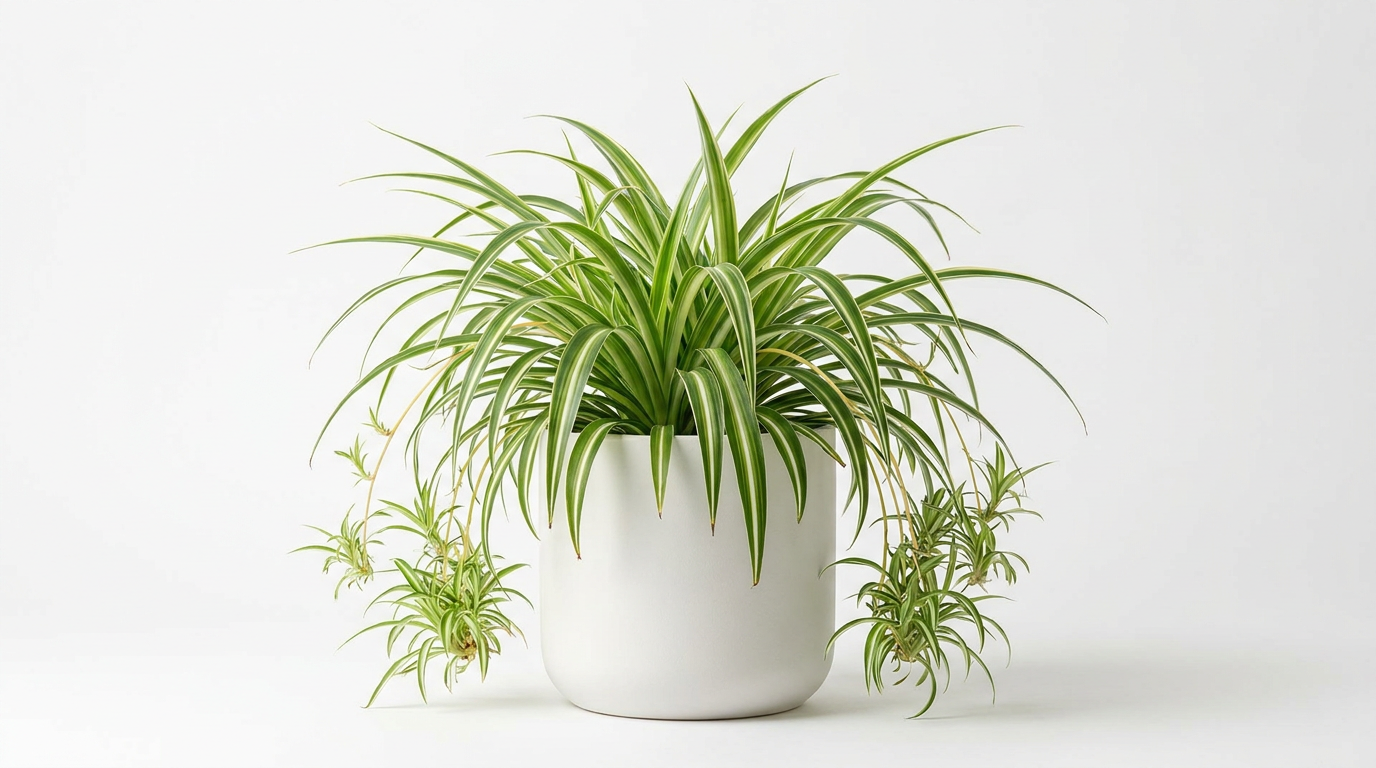
Spider Plant
Very EasyChlorophytum comosum
Spider plants are vigorous, nearly indestructible trailers that produce cascades of baby spiderettes — one of the most forgiving and rewarding houseplants you can grow.
Light
Low to bright indirect light
Water
Every 1–2 weeks
Humidity
Average (40–60%)
Temperature
60–80°F (15–27°C)
Toxicity
Non-toxic
Spider plants are one of the most reliably cheerful houseplants you can grow — vigorous, nearly indestructible, and rewarding in a very literal sense. Give a healthy Chlorophytum comosum a little time and it will send out long arching runners tipped with miniature versions of itself, filling your home with cascading babies that are ready to share with every plant-curious friend you have. Whether you’re a first-time plant parent or a seasoned collector looking for something that practically grows itself, the spider plant delivers.
Quick Care Overview
| Care Factor | Requirement |
|---|---|
| Light | Low to bright indirect light |
| Water | Every 1–2 weeks |
| Humidity | Average (40–60%) |
| Temperature | 60–80°F (15–27°C) |
| Soil | Well-draining potting mix with perlite |
| Fertilizer | Monthly during spring and summer, diluted to half-strength |
| Toxicity | Non-toxic |
Light Requirements
Spider plants are genuinely adaptable when it comes to light — one of the few plants where “low light tolerant” isn’t just marketing spin. They’ll survive in dimmer corners, though you’ll get the most lush foliage and the most enthusiastic production of spiderettes in a spot with bright, indirect light. A few feet back from a north or east-facing window is ideal; a west or south window with a sheer curtain works beautifully too.
- Low light: The plant survives but growth slows significantly, variegation may fade, and spiderette production drops off or stops entirely.
- Bright indirect light: The sweet spot — foliage stays vivid, stripes stay sharp, and runners with baby plantlets appear freely throughout the growing season.
- Direct sun: Scorches the leaves, causing bleached or brown patches, especially on variegated varieties. Avoid extended direct exposure.
Watering
Spider plants prefer even moisture during the growing season but are genuinely forgiving if you miss a watering or two. A good rule of thumb is to water every 1–2 weeks, allowing the top inch of soil to dry out between sessions. In winter, you can ease off further — once every 2–3 weeks is usually plenty as growth slows and the plant’s water demand drops.
One thing to know: spider plants are sensitive to fluoride and other minerals found in tap water. Over time, these can accumulate and cause browning at the leaf tips. If you can, use filtered, distilled, or rainwater — your spider plant will thank you with cleaner, crisper foliage.
Signs of overwatering: Yellowing leaves, mushy or dark stem base, soggy soil that stays wet for more than a week, root rot in severe cases.
Signs of underwatering: Wilting or slightly curled leaves, dry and pulling-away-from-pot soil, browning leaf tips (though this can also indicate fluoride sensitivity or low humidity).
Popular Spider Plant Varieties
Spider plants come in a handful of distinct varieties, each with its own personality:
| Variety | Description |
|---|---|
| Chlorophytum comosum ‘Vittatum’ | The classic — green leaves with a central white or cream stripe running down the center |
| Chlorophytum comosum ‘Variegatum’ | White or cream edges with a green center stripe; a mirror image of Vittatum |
| Chlorophytum comosum ‘Bonnie’ | A curly-leafed cultivar with the same striping as Vittatum but with delightfully wavy, spiraling foliage |
| Hawaiian Spider Plant | Typically refers to a compact, all-green or lightly variegated form; solid and easy-going |
Humidity and Temperature
Spider plants are comfortable in the same range of temperatures that most people find comfortable — 60–80°F (15–27°C) is ideal. They can handle brief dips below that range but should not be exposed to frost or prolonged cold below 50°F (10°C), which will damage the foliage and stress the root system.
Average household humidity of 40–60% is perfectly adequate for spider plants. They don’t need the high humidity demands of, say, a fern or calathea. That said, humidity on the lower end of that range (or in dry winter interiors) can contribute to brown leaf tips. A pebble tray with water, occasional misting, or placing the plant near a humidifier will help if tip browning is an ongoing issue.
Soil and Potting
Spider plants aren’t fussy about soil as long as it drains well. A standard all-purpose potting mix lightened with perlite (roughly 2:1 mix) works great — it holds enough moisture to keep roots happy between waterings while draining freely enough to prevent soggy conditions that lead to rot.
Spider plants grow fast and become root-bound relatively quickly, especially when well-fed and in good light. A slightly snug pot actually encourages spiderette production, so don’t rush to upsize. When you do see roots circling the bottom of the pot or emerging from drainage holes, step up one pot size (about 1–2 inches larger in diameter). Spring is the ideal time to repot. Take care when handling the thick, fleshy roots — they store water and nutrients but snap if handled too roughly.
Propagation
Spider plants are one of the easiest houseplants to propagate, thanks to the long runners they produce tipped with ready-to-root baby plantlets (spiderettes). You can propagate them two ways:
- Root in water first: Snip a spiderette from the runner (leaving a short stub of stem) and place it in a small glass of water, keeping the leaves above the waterline. Roots will appear within 1–2 weeks. Once roots are at least an inch long, pot the plantlet into moist potting mix.
- Pin directly into soil: While the spiderette is still attached to the parent plant’s runner, nestle it into a small pot of moist potting mix sitting beside the parent. Pin it in place with a hairpin or bent wire. Once it roots and shows new growth (usually 2–4 weeks), snip the runner connecting it to the parent.
- Timing matters: Propagate during spring or summer for best results. Spiderettes rooted in fall or winter may struggle without warmth and bright light to encourage root development.
- Share freely: A single spider plant can produce dozens of spiderettes in a season — more than most people can pot up themselves. They make excellent gifts for beginners.
Fertilizing
Feed spider plants once a month during spring and summer with a balanced liquid fertilizer diluted to half the recommended strength. They don’t need heavy feeding — in fact, over-fertilizing is one of the more common causes of brown leaf tips and excess fertilizer salt buildup in the soil. A light, consistent approach through the growing season is far better than occasional heavy doses.
Ease off or stop fertilizing entirely in fall and winter when the plant is not actively growing. Feeding a dormant plant won’t speed things up and risks burning the roots.
Common Problems
Brown leaf tips: The most common spider plant complaint, and usually caused by one of three things — fluoride or mineral buildup from tap water, low humidity, or over-fertilizing. Switch to filtered or distilled water, increase ambient humidity slightly, and make sure you’re not overdoing fertilizer. Trim the brown tips at an angle to restore a natural look.
Yellow leaves: Most often a sign of overwatering or poor drainage. Let the soil dry more between waterings, check that the pot has drainage holes, and inspect the roots for any signs of rot. Occasionally, yellowing can also indicate nitrogen deficiency in a plant that hasn’t been fed in a long time.
No spiderettes: A healthy spider plant in a bright spot with consistent care should produce runners freely. If yours isn’t, try moving it to a brighter location, ensuring it’s slightly root-bound (a roomy pot discourages runners), and maintaining a regular feeding schedule during the growing season.
Pale or washed-out foliage: Usually caused by too much direct sun bleaching the leaves, or conversely, by very low light causing the variegation to fade. Adjust light conditions accordingly.
Wilting despite moist soil: A warning sign of root rot. Unpot the plant, inspect the roots, trim away any black or mushy sections with clean scissors, let the roots air out briefly, and repot into fresh, well-draining mix.
Pests: Spider plants are relatively pest-resistant but can occasionally attract spider mites (ironic), mealybugs, or aphids, especially if grown in dry conditions. Treat with insecticidal soap or neem oil spray, and increase humidity to deter spider mites specifically.
Is Spider Plant Toxic?
Spider plants are non-toxic and considered safe for cats, dogs, and humans — making them one of the most genuinely pet-friendly houseplants you can bring into your home. Some cats are attracted to chewing the leaves (possibly due to a mild hallucinogenic effect similar to catnip), which while not dangerous can cause mild stomach upset if large amounts are consumed. Overall, though, spider plants earn a clean safety record and are frequently recommended for homes with curious pets or small children.
Spider plants have earned their status as a houseplant classic through sheer good-natured reliability. Give one a bright windowsill, a little water, and a bit of patience, and it will reward you with cascading runners, cheerful babies, and decades of easygoing companionship.