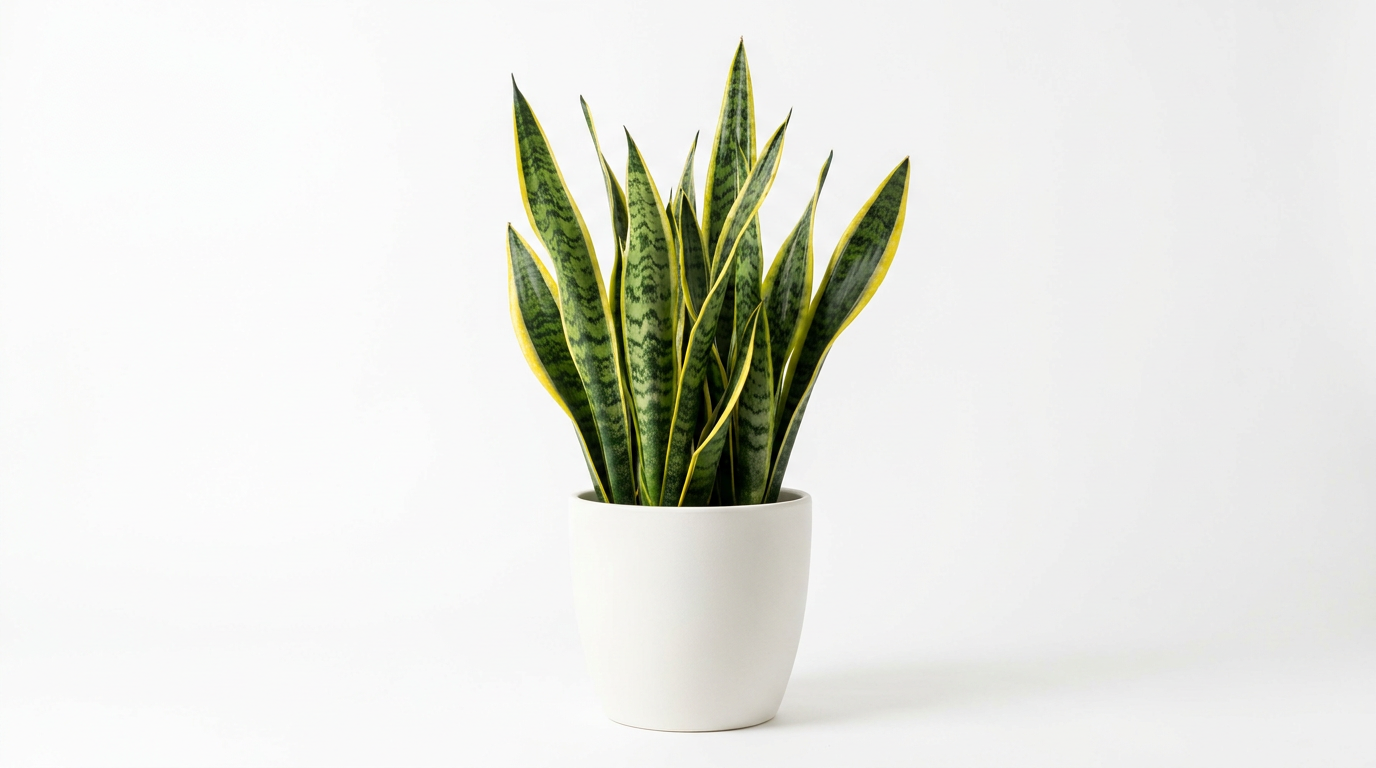
Snake Plant
Very EasyDracaena trifasciata
Snake plants are nearly indestructible survivors that thrive on neglect — tolerating low light, drought, and irregular care that would kill most other houseplants.
Light
Low to bright indirect light
Water
Every 2–6 weeks
Humidity
Low to average (20–50%)
Temperature
60–85°F (15–29°C)
Toxicity
Toxic to pets
If you’ve ever wanted a plant that practically takes care of itself, the snake plant is your answer. Dracaena trifasciata — once classified as Sansevieria and still widely sold under that name — is a bold, architectural succulent-like houseplant that shrugs off neglect, dim corners, and irregular watering with equal indifference. Whether you’re a first-time plant parent or a seasoned collector looking for a low-maintenance standout, the snake plant earns its place in any home.
Quick Care Overview
| Care Factor | Requirement |
|---|---|
| Light | Low to bright indirect light |
| Water | Every 2–6 weeks |
| Humidity | Low to average (20–50%) |
| Temperature | 60–85°F (15–29°C) |
| Soil | Fast-draining cactus or succulent mix |
| Fertilizer | Monthly in spring and summer (diluted to half strength) |
| Toxicity | Toxic to pets |
Light Requirements
Snake plants are champions of adaptability when it comes to light. They can survive in surprisingly dark corners of your home, though they’ll grow noticeably faster and push out more offsets when given brighter conditions. The key word is “survive” versus “thrive” — in very low light they simply stall out, holding their shape without putting on much new growth. For the best results, aim for a spot with bright indirect light, like a few feet back from a south- or east-facing window.
- Low light: The plant survives but grows very slowly or not at all. Variegation may fade slightly over time. Good for a dim office or hallway if you’re okay with minimal growth.
- Bright indirect light: Ideal. The plant grows at a healthy pace, produces offsets, and maintains vivid coloring and crisp leaf edges.
- Direct sun: Prolonged direct sun — especially intense afternoon sun — can scorch the leaves, leaving bleached or brown patches. A few hours of gentle morning sun is generally fine.
Watering
Snake plants store water in their thick, fleshy leaves, making them extraordinarily drought tolerant. During the growing season (spring through summer), water every 2–4 weeks, allowing the soil to dry out completely between waterings. In fall and winter, dial it back further — once every 4–6 weeks is often plenty, and in cold, dim conditions some growers skip watering almost entirely for weeks at a time.
The golden rule: when in doubt, wait. Overwatering is by far the most common way to kill a snake plant. Before watering, push your finger 2 inches into the soil — if there’s any moisture at all, hold off.
Signs of overwatering: Leaves turn yellow, soft, or mushy at the base. The soil smells sour or musty. Roots are brown and slimy rather than white and firm — classic root rot. Act quickly by removing damaged leaves, letting the soil dry, and repotting into fresh dry mix if roots are compromised.
Signs of underwatering: Leaves may wrinkle slightly or develop very faint creasing along their length. Growth slows to a halt. Underwatering is rarely a crisis for snake plants — they recover quickly once watered.
Popular Snake Plant Varieties
One of the great pleasures of snake plant collecting is how many striking varieties exist, from towering upright swords to tidy compact rosettes.
| Variety | Description |
|---|---|
| Laurentii | The classic — dark green with lighter cross-banding and bright yellow leaf margins. One of the most common varieties sold. |
| Moonshine | Soft, silvery-green leaves with a subtle glow. Striking in low-light rooms. |
| Cylindrica | Round, spear-like leaves that grow in a fan shape. Can be left natural or braided when young. |
| Hahnii (Bird’s Nest) | A compact dwarf variety that forms a low, open rosette. Perfect for desks and shelves. |
| Bantel’s Sensation | Narrow leaves with dramatic white vertical stripes. Slower growing but stunning. |
| Black Gold | Deep green leaves with golden-yellow margins, similar to Laurentii but darker and more dramatic. |
| Fernwood | A hybrid with slender, mottled cylindrical leaves that arch outward gracefully. |
Humidity and Temperature
Snake plants are genuinely unfussy about humidity. They’re comfortable anywhere in the 20–50% relative humidity range, which covers the typical indoor environment in most climates — no misting, pebble trays, or humidifiers required. They’re actually more susceptible to problems in very high humidity than in dry air, since excess moisture around the base can encourage rot.
Keep your snake plant in temperatures between 60–85°F (15–29°C). They handle the warm end of that range easily, but cold is their true weakness. Temperatures below 50°F (10°C) cause chilling injury — leaves develop soft, water-soaked patches that eventually turn mushy. Never leave a snake plant near a drafty window in winter or outdoors when temperatures drop toward freezing. A consistent indoor temperature is all they ask.
Soil and Potting
Well-draining soil is non-negotiable for snake plants. Standard potting mix retains too much moisture and dramatically increases the risk of root rot. Use a cactus and succulent mix straight from the bag, or amend regular potting soil with perlite or coarse sand at a ratio of roughly 50/50.
Terracotta pots are an excellent choice because they’re porous and wick away excess moisture from the soil. Plastic or glazed ceramic pots are fine too — just be more conservative with your watering schedule.
Snake plants prefer to be slightly root-bound and don’t need frequent repotting. Plan to move up one pot size every 2–3 years, or when you see roots circling the bottom of the pot or rhizomes pushing up above the soil line. Spring is the ideal time to repot.
Propagation
Snake plants are easy to propagate through several methods, though division is the fastest way to get a sizable new plant.
- Division (fastest method): When repotting, look for offsets — small pups growing from the base of the mother plant, attached by a rhizome. Use a clean, sharp knife to separate the offset along with some roots. Plant it directly into a pot with well-draining mix and water lightly.
- Rhizome division: If you see thick, horizontal rhizomes running through the soil, you can cut sections of rhizome (each with at least one growth point) and pot them up separately. Keep the soil barely moist until new growth appears.
- Leaf cuttings in water: Cut a healthy leaf into sections 3–4 inches long, taking note of which end is “up” (cuttings planted upside down will not root). Place the bottom ends in a jar of water in a bright spot, changing the water weekly. Roots appear in 4–8 weeks; pot up once roots are an inch or more long.
- Leaf cuttings in soil: Same as above, but insert the cuttings directly into barely moist cactus mix. Keep in a warm, bright spot and resist the urge to water frequently.
Important note on variegation: Leaf cuttings will produce plants genetically identical to the cutting — but variegated varieties like Laurentii often revert to solid green when propagated this way. To preserve the yellow margins, propagate by division or rhizome separation instead.
Fertilizing
Snake plants are light feeders — they grow slowly by nature and don’t need heavy fertilization. Feed once a month during spring and summer with a balanced liquid fertilizer (such as 10-10-10) diluted to half the recommended strength. Skip fertilizing entirely in fall and winter when growth naturally slows or stops.
Avoid over-fertilizing: too much fertilizer causes salt buildup in the soil, which can burn roots and cause brown leaf tips. If you notice white crusty deposits on the soil surface, flush the pot thoroughly with water to leach out accumulated salts.
Common Problems
Yellow, mushy leaves: Almost always caused by overwatering or root rot. Remove affected leaves, let the soil dry completely, and check the roots. If roots are brown and soft, repot into fresh dry mix and hold off on watering for two weeks.
Brown leaf tips: Can result from fluoride or salt sensitivity (especially from tap water or over-fertilizing), low humidity, or cold drafts. Try using filtered or distilled water and flush the soil periodically to reduce salt buildup.
Pale, washed-out color: Usually caused by too much direct sun, which bleaches the leaf pigmentation. Move to a spot with bright indirect light and the coloring should stabilize.
Drooping or falling-over leaves: Overwatering is the most common culprit — waterlogged roots can’t support the plant structure. It can also happen with very low light over a long period. Less commonly, the plant may simply be top-heavy and need staking or repotting into a more stable pot.
No new growth: Normal in winter. If growth has stalled in the growing season, check that the plant has adequate light and isn’t severely root-bound. A small amount of fertilizer in spring can help kick things into gear.
Pests (spider mites, mealybugs): Snake plants are generally pest-resistant but not immune. Inspect the base of leaves and soil line for cottony mealybug clusters or fine webbing from spider mites. Treat with neem oil, insecticidal soap, or wipe affected areas with a cotton swab dipped in rubbing alcohol.
Is Snake Plant Toxic?
Yes — snake plants are toxic to pets. They contain saponins, natural chemical compounds that cause gastrointestinal irritation in cats and dogs if ingested. Symptoms include nausea, vomiting, drooling, and diarrhea. While rarely life-threatening in small amounts, it’s best to keep snake plants out of reach of curious pets. If you suspect your pet has chewed on a snake plant, contact your veterinarian or the ASPCA Animal Poison Control Center. Snake plants are considered non-toxic to humans.
With its striking upright leaves, near-zero care requirements, and remarkable resilience, the snake plant is one of the most rewarding plants you can own. Give it a bright spot when you can, water it less than you think it needs, and it will reward you with bold, graphic beauty for years to come.