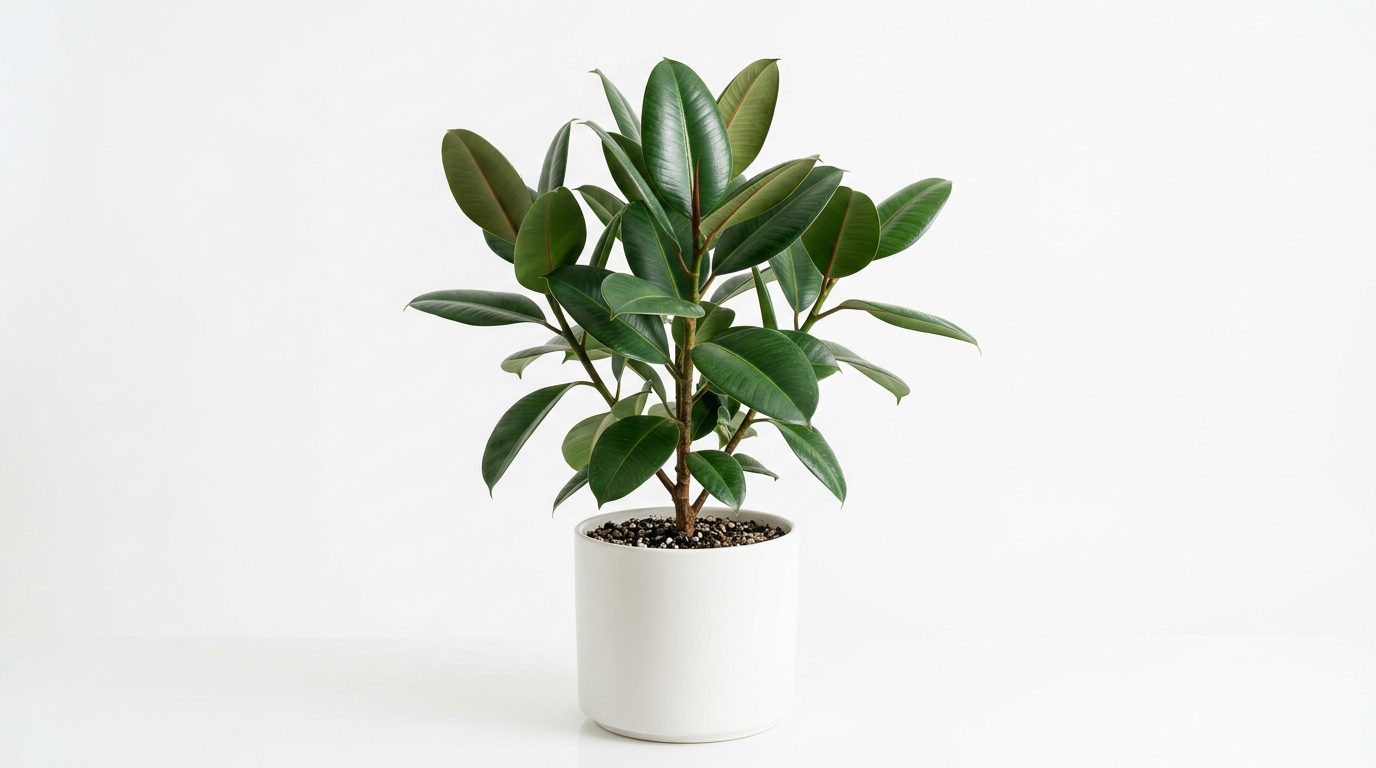
Rubber Plant
ModerateFicus elastica
Rubber plants are bold, glossy statement trees that grow quickly in bright light and bring a dramatic architectural presence to any room.
Light
Bright indirect light
Water
Every 1–2 weeks
Humidity
Average (40–60%)
Temperature
60–80°F (15–27°C)
Toxicity
Toxic to pets
The Rubber Plant (Ficus elastica) is one of the most striking houseplants you can grow — its oversized, waxy leaves in deep green or dramatic burgundy command attention the moment you walk into a room. It grows quickly under the right conditions, effortlessly filling vertical space and giving even a bare corner a lush, sculptural presence. If you want bold and low-fuss, the rubber plant delivers.
Quick Care Overview
| Care Factor | Requirement |
|---|---|
| Light | Bright indirect light |
| Water | Every 1–2 weeks |
| Humidity | Average (40–60%) |
| Temperature | 60–80°F (15–27°C) |
| Soil | Well-draining potting mix with perlite |
| Fertilizer | Monthly in spring and summer |
| Toxicity | Toxic to pets |
Light Requirements
Rubber plants thrive in bright, indirect light and will reward you with faster growth and richer leaf colour when they get plenty of it. They are adaptable enough to handle moderate light, but they slow down considerably and can become stretched and leggy over time. Variegated cultivars like Tineke and Ruby need more light than solid green varieties to hold their patterning.
- Low light: The plant survives but growth stalls, lower leaves may drop, and variegation fades on patterned cultivars.
- Bright indirect light: Ideal — leaves stay glossy and full-sized, growth is vigorous, and colours are most vivid.
- Direct sun: Afternoon direct sun scorches the leaves, leaving brown, papery patches. A few hours of gentle morning sun is fine.
Watering
Water your rubber plant every 1–2 weeks during the growing season, allowing the top inch or two of soil to dry out before watering again. Rubber plants hold water in their thick leaves and are more forgiving of a missed watering than of soggy roots. In winter, pull back watering to once every 2–3 weeks as growth slows. One bonus maintenance tip: wipe the large leaves down with a damp cloth every few weeks to remove dust — a clean leaf surface means better light absorption and a shinier appearance.
Signs of overwatering: Yellowing lower leaves, soft or mushy stems at the base, soggy soil that never seems to dry, and sudden leaf drop. If caught early, let the soil dry out fully before watering again.
Signs of underwatering: Drooping or limp leaves, leaf curl, dry and pulling-away-from-the-pot soil, and brown crispy leaf edges. A thorough soak and the plant will usually perk back up within a day.
Popular Rubber Plant Varieties
| Variety | Description |
|---|---|
| Burgundy | Deep wine-red to near-black leaves; the classic dramatic statement plant |
| Tineke | Green and cream variegation with pink blush on new growth; needs bright light |
| Ruby | Green, cream, and vivid pink variegation; slower growing and light-hungry |
| Abidjan | Very dark, almost black-green leaves with red midrib; a bold, moody choice |
| Robusta | Classic mid-green with large, glossy leaves; the most forgiving and widely available |
| Melany | Compact grower with darker leaves; good for smaller spaces |
Humidity and Temperature
Rubber plants are tropical natives and feel most at home in average indoor humidity — the 40–60% range that most homes naturally sit in is perfectly comfortable. They do not need misting or a humidifier under normal conditions, though they will appreciate a little extra humidity if your home gets very dry in winter. Keep your plant in temperatures between 60–80°F (15–27°C) and away from cold drafts, air conditioning vents, and heating sources. Temperatures below 55°F (13°C) cause stress and leaf drop, and frost will kill the plant outright.
Soil and Potting
A well-draining potting mix is essential — rubber plants hate sitting in waterlogged soil. Use a standard indoor potting mix cut with about 20–30% perlite or coarse sand to improve drainage. Terracotta pots are a great choice because they allow the soil to dry more evenly. Repot every 1–2 years in spring when you see roots circling the bottom of the pot or poking out of drainage holes. Go up one pot size at a time — too large a pot holds excess moisture and increases the risk of root rot.
Propagation
- Take a stem cutting 4–6 inches long, cutting just below a leaf node with a clean, sharp blade.
- Let the cut end sit in open air for 30–60 minutes until the milky latex sap stops bleeding and forms a skin. Wear gloves — the sap can irritate skin.
- Remove lower leaves, leaving 1–2 leaves at the top.
- Dip the cut end in rooting hormone (optional but helpful), then plant in moist potting mix or place in a jar of water.
- Keep the cutting in a warm spot with bright indirect light. If rooting in soil, cover loosely with a plastic bag or humidity dome to retain moisture.
- Roots typically develop in 4–8 weeks. For water propagation, pot up once roots reach 1–2 inches long.
- Alternatively, use air layering for larger branches: wound the stem, wrap with moist sphagnum moss, seal with plastic wrap, and wait for roots to develop before cutting.
Fertilizing
Feed your rubber plant with a balanced liquid fertilizer (such as 10-10-10 or 20-20-20) diluted to half strength once a month during spring and summer. Do not fertilize in fall and winter when growth naturally slows — feeding a resting plant can lead to salt build-up in the soil and potential root burn. If you notice white crusty deposits on the soil surface, flush the pot thoroughly with water every few months to clear accumulated salts.
Common Problems
Yellowing lower leaves: Most often overwatering or natural shedding of the oldest leaves. Check soil moisture first — if it stays wet for more than two weeks, cut back on watering and improve drainage.
Sudden leaf drop: Usually caused by a change in environment — being moved, cold drafts, or temperature fluctuations. Rubber plants are creatures of habit. Find a stable spot and leave them there.
Leggy, stretched growth: Insufficient light. Move the plant closer to a bright window. You can prune leggy stems back to a node to encourage bushier growth.
Brown leaf edges or tips: Low humidity, cold air, or inconsistent watering. Keep the plant away from vents and ensure watering is regular.
White, sticky residue on leaves: Could be scale insects or mealybugs. Wipe leaves with a cotton ball dipped in rubbing alcohol and treat with neem oil or insecticidal soap.
Pale, washed-out leaves on variegated cultivars: Too much direct sun bleaching the colour out, or conversely not enough light to maintain patterning. Adjust placement and monitor for improvement over a few weeks.
Is Rubber Plant Toxic?
Yes — rubber plants are toxic to pets. The milky white latex sap found throughout the plant contains compounds that are toxic to cats and dogs if ingested, causing symptoms including drooling, vomiting, and digestive upset. The sap can also cause skin irritation in sensitive individuals, so wear gloves when pruning or propagating. Keep rubber plants out of reach of pets and small children.
Once you find its spot — bright, warm, and out of the way of drafts — the rubber plant is remarkably self-sufficient and incredibly rewarding. Give it a little consistency and it will grow into one of the most impressive plants in your home.