Pilea
EasyPilea peperomioides
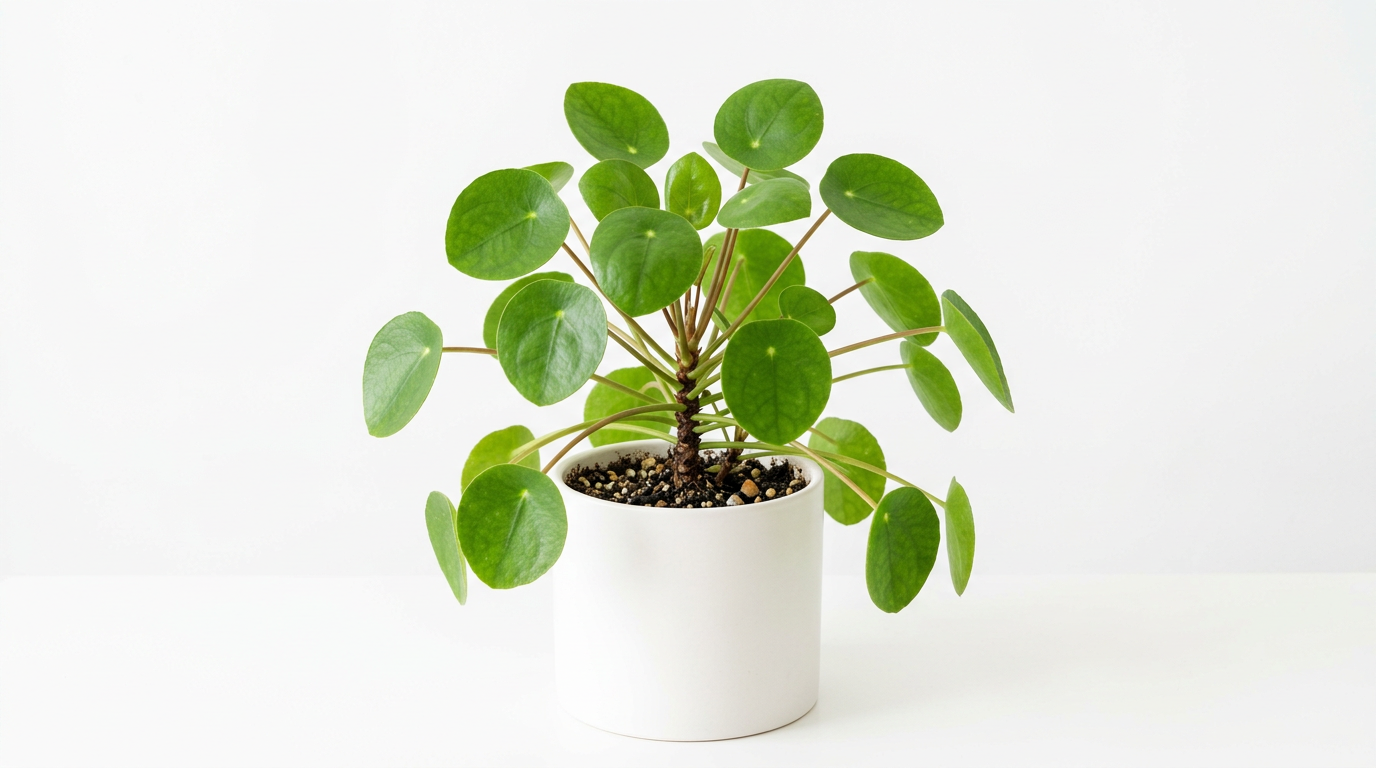
Pilea peperomioides is the cheerful UFO plant with perfectly round coin-shaped leaves and a constant supply of baby pups — the ultimate shareable houseplant.
Light
Bright indirect light
Water
Every 1–2 weeks
Humidity
Average (40–60%)
Temperature
60–75°F (15–24°C)
Toxicity
Non-toxic
Pilea peperomioides — also known as the Chinese Money Plant, UFO Plant, or Pancake Plant — is one of the most instantly recognizable houseplants you can own, with its perfectly round, coin-shaped leaves perched on slender stems like a stack of tiny lily pads. Beyond its cheerful good looks, it has a legendary “pass-it-on” tradition: pilea constantly produces baby offshoots called pups, which owners root and share with friends, spreading the plant from household to household across the globe. If you receive one as a gift, consider it your duty to eventually pass on a pup of your own.
Quick Care Overview
| Care Factor | Requirement |
|---|---|
| Light | Bright indirect light |
| Water | Every 1–2 weeks |
| Humidity | Average (40–60%) |
| Temperature | 60–75°F (15–24°C) |
| Soil | Well-draining potting mix with perlite |
| Fertilizer | Monthly during spring and summer |
| Toxicity | Non-toxic |
Light Requirements
Pilea thrives in bright, indirect light and will reward a good window with fast, symmetrical growth and deeply saturated green leaves. One important quirk: pilea are strongly phototropic, meaning they lean aggressively toward their light source. Rotate the pot a quarter turn every week or so to keep the plant growing upright and balanced rather than perpetually reaching in one direction.
- Low light: Growth slows significantly and leaves may become smaller and paler. The plant will survive but won’t produce many pups.
- Bright indirect light: Ideal. Leaves stay large, round, and deep green, and the plant grows vigorously and produces plenty of offshoots.
- Direct sun: Scorches the delicate round leaves, causing bleached patches or crispy brown edges. Keep pilea back from south- or west-facing windows that get harsh afternoon sun.
Watering
Water your pilea every 1–2 weeks, allowing the top inch of soil to dry out between waterings. Pilea is moderately drought tolerant — it would rather be slightly too dry than too wet — so when in doubt, hold off a few more days. Always water thoroughly, letting water flow freely from the drainage hole, then empty the saucer so the roots never sit in standing water. In winter when growth slows, extend the interval and water less frequently.
Signs of overwatering: Yellowing lower leaves, mushy stems near the soil line, or a sour smell from the pot. Persistent overwatering leads to root rot, which can be fatal if not caught early.
Signs of underwatering: Drooping or wilting leaves that perk back up within a few hours of watering. Leaf edges may curl inward, and the soil will feel completely dry and pulling away from the pot edges.
Humidity and Temperature
Pilea is happily adaptable to typical indoor conditions. It prefers temperatures between 60–75°F (15–24°C) and will suffer if exposed to cold drafts, air conditioning vents, or temperatures below about 50°F (10°C). Frost is fatal. Average household humidity of 40–60% suits it perfectly — no misting or humidifier required under normal conditions. If your home is very dry in winter, grouping plants together or placing the pot on a pebble tray with water can provide a gentle humidity boost without the risks of overwatering from overhead misting.
Soil and Potting
Use a well-draining potting mix amended with perlite — roughly 2 parts standard potting soil to 1 part perlite works well. The goal is soil that holds enough moisture to hydrate the roots between waterings but drains quickly enough that the roots never stay waterlogged. A pot with at least one drainage hole is non-negotiable. Because pilea produces pups prolifically, you may find the root ball filling out faster than you expect — plan to repot into a container 1–2 inches larger every 1–2 years in spring, or whenever you see roots circling the bottom of the pot or poking out of the drainage hole.
Propagation
Pilea is one of the easiest houseplants to propagate because the plant does most of the work for you, producing small offshoots (pups) from its roots that push up through the soil around the base of the mother plant.
- Wait until a pup is at least 2–3 inches tall with a few leaves of its own — this ensures it has enough energy stored to survive separation.
- Use a clean knife or scissors to cut the pup away from the mother plant, slicing through the connecting root as close to the pup’s base as possible. Try to keep a small section of root attached to the pup.
- Pot the pup into a small container with fresh, moist potting mix. Bury the base just enough to keep it stable.
- Keep the newly potted pup in bright indirect light and maintain consistent moisture (not soggy) for the first few weeks while it establishes new roots.
- Once you see new leaf growth — usually within 2–4 weeks — the pup has rooted successfully and can be cared for like a mature plant. This is your moment to find it a good home.
Fertilizing
Feed your pilea once a month during the active growing season (spring through summer) with a balanced liquid fertilizer diluted to half the recommended strength. A 10-10-10 or 20-20-20 NPK formula works well. Do not fertilize in fall and winter when the plant’s growth naturally slows — unused fertilizer salts build up in the soil and can burn the roots. If you notice white crusty deposits on the soil surface, flush the pot thoroughly with plain water to wash out accumulated salts.
Common Problems
Yellowing lower leaves: The most common issue, usually caused by overwatering or poor drainage. Check that the pot has drainage and that you’re allowing the top inch of soil to dry before watering again. Some loss of the oldest lower leaves is normal as the plant matures.
Leaves curling inward: Often a sign of underwatering, low humidity, or heat stress from proximity to a heater or sunny window. Water thoroughly and move the plant away from any direct heat sources.
Leggy, stretched growth: Caused by insufficient light. The stems elongate as the plant reaches for more light, and the coin-shaped leaves may become smaller. Move the plant closer to a bright window and rotate weekly for even growth.
Brown or bleached leaf patches: Direct sun exposure scorching the leaves. Pilea need bright light but cannot handle harsh direct sun — move the plant back from the window or filter the light with a sheer curtain.
Leaves dropping suddenly: Usually a response to a sudden change in environment — cold draft, dramatic temperature swing, or being moved to a much darker spot. Stabilize conditions and give the plant a few weeks to adjust.
Pests (fungus gnats, spider mites): Fungus gnats are attracted to consistently wet soil — let the soil dry more between waterings and use sticky yellow traps to catch adults. Spider mites appear in hot, dry conditions; increase humidity and wipe down leaves with a damp cloth or diluted neem oil solution.
Is Pilea Toxic?
Pilea peperomioides is non-toxic to cats, dogs, and humans. If a curious pet takes a nibble or a small child gets into the plant, there’s no cause for alarm — it is considered safe for households with animals and children. This makes it an especially welcoming choice for pet-friendly homes where many popular tropical plants would be off-limits.
Pilea is a plant that gives back in the most literal way possible — it grows quickly, stays beautiful with minimal fuss, and practically insists on sharing itself with the people you care about. Give it a bright spot, water it with a little patience, and before long you’ll have pups to spare.