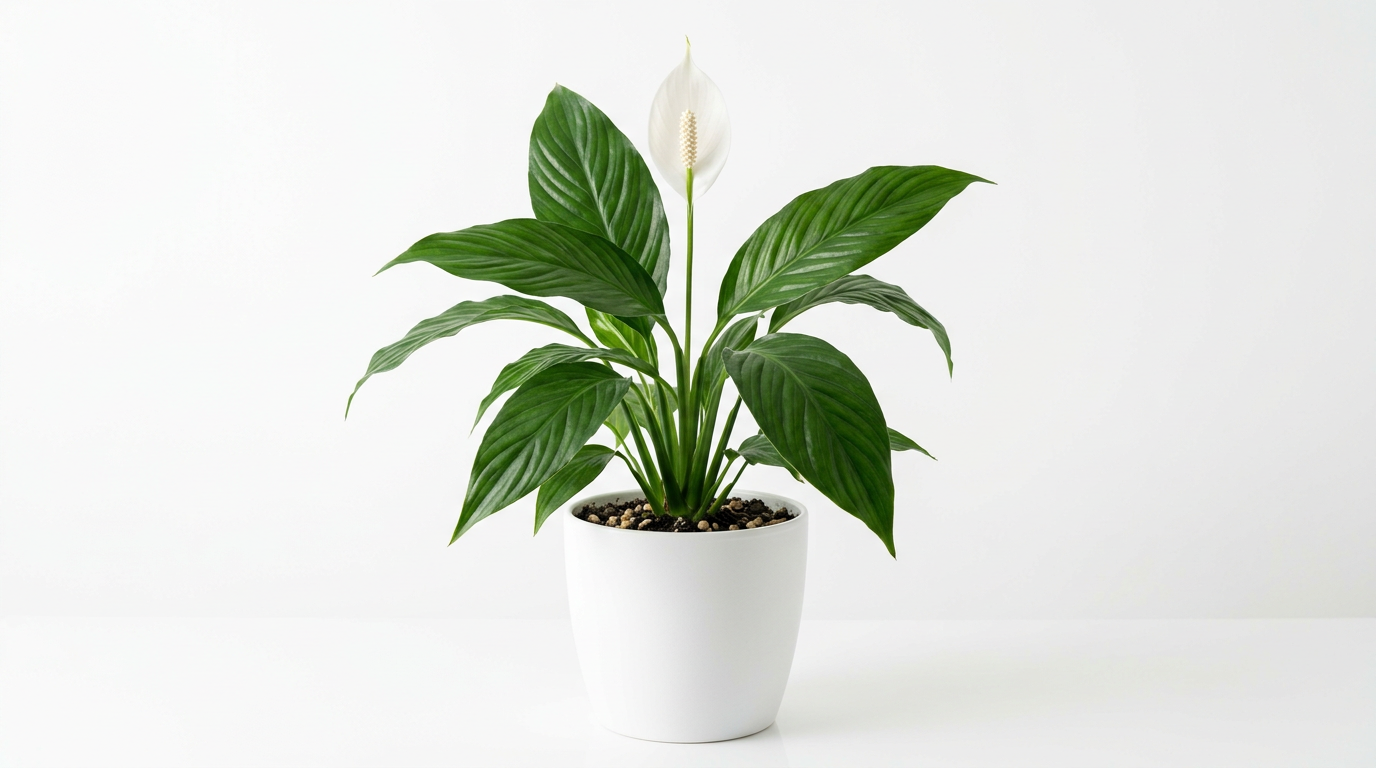
Peace Lily
EasySpathiphyllum wallisii
Peace lilies bring elegant white blooms to low-light spaces and rank among the most reliable and rewarding houseplants for beginners.
Light
Low to medium indirect light
Water
Every 1–2 weeks
Humidity
Average to high (50–70%)
Temperature
65–85°F (18–29°C)
Toxicity
Toxic to humans and pets
Peace lilies are one of those rare houseplants that deliver both beauty and forgiveness in equal measure. Their elegant white spathes rise above deep green foliage, making a quiet statement in corners and shelves that most flowering plants would simply refuse to inhabit. Add a well-documented ability to filter indoor air pollutants, and it’s easy to see why Spathiphyllum wallisii has earned its place as one of the most beloved houseplants in the world.
Quick Care Overview
| Care Factor | Requirement |
|---|---|
| Light | Low to medium indirect light |
| Water | Every 1–2 weeks |
| Humidity | Average to high (50–70%) |
| Temperature | 65–85°F (18–29°C) |
| Soil | Rich, well-draining potting mix |
| Fertilizer | Monthly during spring and summer |
| Toxicity | Toxic to humans and pets |
Light Requirements
Peace lilies are champions of low-light living, but there’s a useful distinction between surviving and thriving. They’ll stay alive in dim corners, but brighter indirect light rewards you with more frequent blooms and lusher foliage. What they cannot handle is direct sun, which scorches their dark leaves quickly.
- Low light: Plant survives and holds its foliage but blooms rarely or not at all; growth slows considerably
- Bright indirect light: Plant grows actively, produces the most blooms, and maintains the richest, deepest green leaves
- Direct sun: Leaves develop pale yellow patches, brown scorch marks, and crispy edges within days
Watering
Water your peace lily every 1–2 weeks, allowing the top inch of soil to dry out slightly between waterings. One of the peace lily’s most endearing traits is how clearly it communicates thirst — the leaves will droop dramatically when the plant needs water, then perk back up within a few hours of a good drink. While this is a helpful signal, try not to let it happen too often, as repeated severe wilting stresses the roots over time.
Signs of overwatering: Yellowing leaves, soggy soil, mushy stems at the base, root rot with a foul smell when you unpot the plant
Signs of underwatering: Dramatic, rapid drooping of all leaves, dry and pulling-away-from-the-pot soil, crispy brown leaf tips that appear after repeated wilting cycles
Getting Peace Lily to Bloom
If your peace lily hasn’t bloomed in a while, a few adjustments can coax it back into flower. The single most effective change is moving it to a spot with brighter indirect light — low light keeps the foliage alive but rarely triggers blooming. A slight drop in nighttime temperature (into the low 60s°F / around 16–17°C) can also stimulate flower production, mimicking the seasonal cues the plant experiences in its native tropical habitat. Feed monthly with a balanced liquid fertilizer diluted to half strength during spring and summer, and be patient — blooms typically appear in late winter through spring. Some growers also find that a period of slight drought stress, letting the soil dry a touch more than usual, can trigger the plant to bloom as a survival response.
Humidity and Temperature
Peace lilies originate from tropical forests in Central and South America, so they appreciate warm, humid conditions. Keep temperatures between 65–85°F (18–29°C) and avoid placing the plant near cold drafts, air conditioning vents, or heating registers, all of which can cause leaf browning and stress. They are sensitive to temperatures below 55°F (13°C) and should never be left outdoors when nights turn cold.
Humidity of 50–70% keeps the foliage looking its best and prevents the chronic brown leaf tips that plague peace lilies in dry indoor environments. Group plants together, place the pot on a pebble tray filled with water (keeping the pot above the waterline), or run a humidifier nearby to maintain adequate moisture in the air.
Soil and Potting
Peace lilies thrive in a rich, well-draining potting mix that retains some moisture without becoming waterlogged. A standard indoor potting mix amended with a handful of perlite for drainage works well. Avoid heavy, compacting soils that stay wet for extended periods, as these invite root rot.
Repot every 1–2 years in spring, or when you see roots circling the bottom of the pot or pushing through drainage holes. Move up only one pot size at a time — too large a pot holds excess moisture that the roots can’t absorb, increasing rot risk. Peace lilies are slightly more tolerant of being root-bound than many houseplants and will even bloom more readily when a little snug in their container.
Propagation
Peace lilies cannot be propagated from stem or leaf cuttings — division is the only reliable method, and it’s best done at repotting time.
- Remove the plant from its pot and gently shake away excess soil to expose the root ball.
- Identify natural clumps of stems, each with several leaves and a healthy section of roots attached.
- Carefully pull or cut the clumps apart, using clean scissors or a knife if the roots are tightly tangled. Each division needs at least two or three stems and a good root mass to establish successfully.
- Pot each division individually in fresh, well-draining potting mix and water thoroughly.
- Place divisions in bright indirect light and keep the soil consistently moist for the first few weeks while the roots settle in. Expect some temporary wilting as the plant adjusts — this is normal.
Fertilizing
Feed your peace lily once a month during spring and summer with a balanced liquid fertilizer diluted to half the recommended strength. Full-strength fertilizer can burn the roots and worsen the brown leaf tips that peace lilies are already prone to. In fall and winter, reduce feeding to every six to eight weeks or stop entirely, as the plant’s growth slows and its nutrient needs decrease. Avoid high-phosphorus “bloom booster” formulas; a balanced 10-10-10 or 20-20-20 diluted appropriately is all this plant needs.
Common Problems
Brown leaf tips: The most common peace lily complaint, almost always caused by fluoride sensitivity, low humidity, or inconsistent watering. Switch to filtered or distilled water, boost humidity to 50%+, and water before the plant wilts severely.
Yellow leaves: Typically a sign of overwatering or too much direct light. Check that soil is drying slightly between waterings and that the pot has proper drainage. If the whole plant yellows at once, check the roots for rot.
Drooping despite moist soil: If the soil is wet but the plant is drooping, root rot may be preventing water uptake. Unpot the plant, trim any black or mushy roots, and repot in fresh dry soil. Let it recover before watering again.
No blooms: Usually a light problem. Move the plant to a brighter spot with indirect light, fertilize monthly in the growing season, and consider a slight temperature drop at night to trigger flowering.
White crusty deposits on soil surface: Mineral buildup from tap water or fertilizer. Flush the soil thoroughly with water every few months, or switch to filtered water. Trim off any salt-burned leaf tips with clean scissors.
Pale or washed-out leaves: Too much light. Move the plant away from bright windows or filter the light with a sheer curtain.
Is Peace Lily Toxic?
Peace lily is toxic to humans and pets. The plant contains calcium oxalate crystals throughout its leaves, stems, and flowers, which cause immediate oral irritation, burning, excessive drooling, and vomiting if chewed or ingested. Despite the name, peace lily is not a true lily (Lilium), so it does not carry the extreme kidney-failure risk that true lilies pose to cats — but it is still considered harmful and should be kept well out of reach of curious cats, dogs, and small children.
With a little attention to light and consistent watering, a peace lily will reward you for years with graceful white blooms and glossy, deep green foliage that makes any room feel more alive.