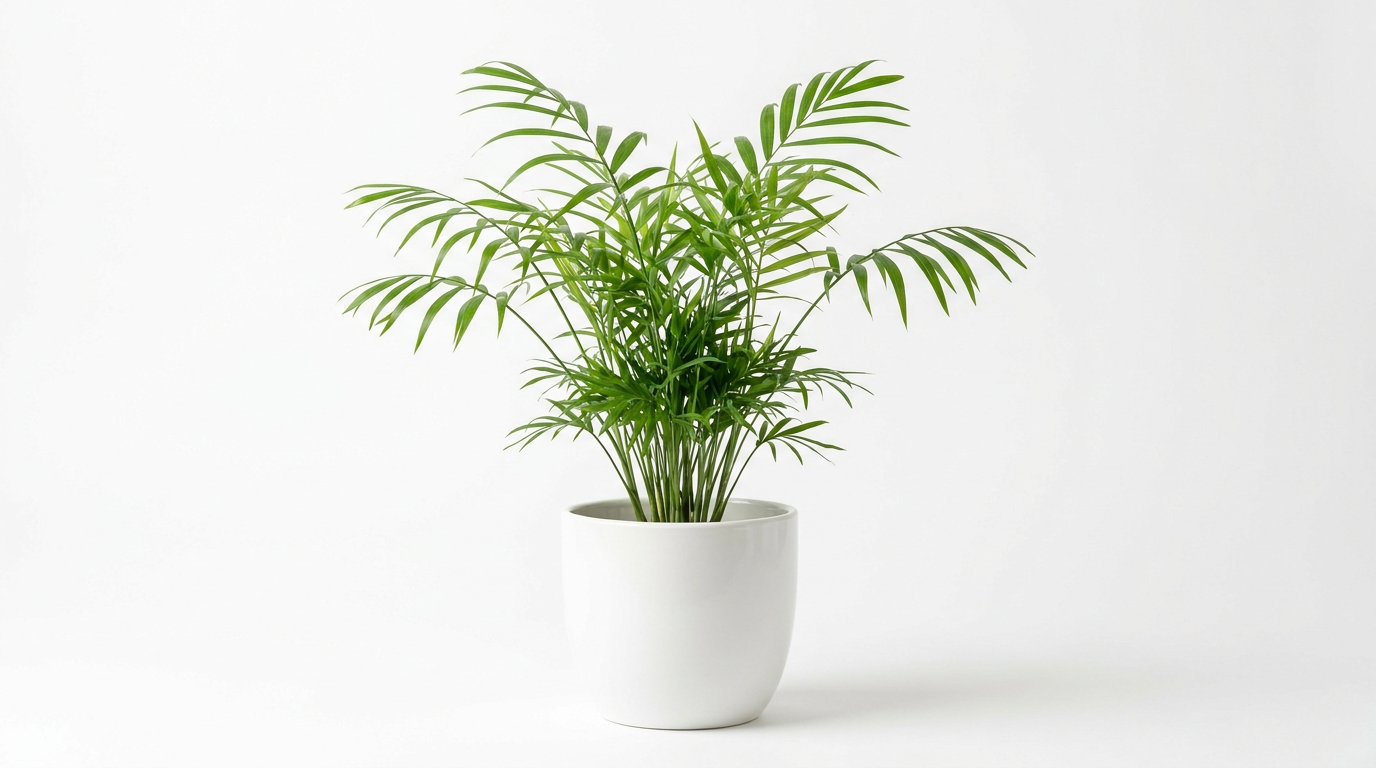
Parlour Palm
Very EasyChamaedorea elegans
Parlour palms are one of the most adaptable and low-maintenance indoor palms, with elegant arching fronds and impressive tolerance for lower light conditions.
Light
Low to medium indirect light
Water
Every 1–2 weeks
Humidity
Average (40–60%)
Temperature
65–80°F (18–27°C)
Toxicity
Non-toxic
Parlour palms were the houseplant of choice in Victorian drawing rooms — and it turns out the Victorians were onto something. Chamaedorea elegans is one of the easiest and most forgiving indoor palms you can grow, with graceful arching fronds that soften any space without demanding much in return. Its remarkable tolerance for lower light and average humidity makes it a reliable choice for beginners and experienced plant keepers alike.
Quick Care Overview
| Care Factor | Requirement |
|---|---|
| Light | Low to medium indirect light |
| Water | Every 1–2 weeks |
| Humidity | Average (40–60%) |
| Temperature | 65–80°F (18–27°C) |
| Soil | Well-draining peat or coco coir mix with perlite |
| Fertilizer | Monthly during spring and summer, diluted to half strength |
| Toxicity | Non-toxic |
Light Requirements
Parlour palms are genuinely one of the most shade-tolerant palms available for indoor growing — a trait that made them prized in dim Victorian parlours long before grow lights existed. They thrive in low to medium indirect light and will hold their own in spots that would stress most other plants. That said, they grow a little faster and fuller when given brighter (but still indirect) conditions.
- Low light: Plants survive and stay reasonably healthy, though growth slows considerably. Expect fronds to stay slightly smaller and new growth to be infrequent.
- Bright indirect light: The sweet spot — parlour palms grow at a good pace and produce full, lush fronds without any risk of sun damage.
- Direct sun: Avoid it. Direct sunlight scorches the fronds quickly, leaving bleached or crispy patches that won’t recover.
Watering
Water your parlour palm every 1–2 weeks, allowing the top inch of soil to dry out between waterings. Stick your finger into the soil — if the top inch feels dry, it’s time to water; if it still feels damp, wait a few more days. Water thoroughly until it drains freely from the bottom, then empty the saucer so the roots never sit in standing water. In winter or lower-light conditions, the plant’s water uptake slows, so lean toward the longer end of that interval.
Parlour palms are more forgiving of a little drought than they are of soggy soil — overwatering is by far the more common mistake.
Signs of overwatering: Yellowing lower fronds, mushy stems near the base, soggy soil that stays wet for more than two weeks, and a faint sour or musty smell from the pot.
Signs of underwatering: Fronds that droop or feel limp, dry and pulling-away soil, and leaf tips that turn brown and crispy.
Humidity and Temperature
Parlour palms are comfortable in the same conditions most people find comfortable — average household humidity of 40–60% is perfectly fine. They don’t require a humidifier or misting, though they’ll show their appreciation with lusher growth if humidity creeps toward the higher end of that range. Dry winter air from heating systems can push humidity below 30%, which tends to show up as brown leaf tips; a pebble tray with water beneath the pot helps without overcomplicating things.
Keep your parlour palm in temperatures between 65–80°F (18–27°C). They dislike cold drafts, air conditioning vents blowing directly on the foliage, and temperatures that dip below about 50°F (10°C) for any extended period. A consistently warm spot away from exterior doors and windows during winter is ideal.
Soil and Potting
Parlour palms do best in a well-draining mix that holds some moisture without becoming waterlogged. A blend of peat or coco coir with perlite (roughly 60/40) works well, or use a quality palm-specific potting mix. Good drainage is non-negotiable — sitting in dense, compacted soil is one of the fastest routes to root rot.
One counterintuitive fact about parlour palms: they actually prefer to be slightly root-bound. Repot only when roots are visibly circling the bottom or escaping the drainage holes, typically every 2–3 years. When you do repot, move up just one pot size (1–2 inches in diameter) — a pot that’s too large holds excess moisture and increases overwatering risk. Spring is the best time to repot.
Propagation
- Understand the limitation first: Parlour palms cannot be propagated from cuttings or by dividing stems — each stem must originate from its own seed. What looks like a multi-stem plant is actually several seedlings grown together in one pot.
- Source fresh seeds: Parlour palm seeds are available from specialty suppliers. Freshness matters — seeds older than a few months have significantly lower germination rates.
- Prepare a seed-starting mix: Use a moist, well-draining mix of coco coir and perlite. Sow seeds just below the surface.
- Provide warmth: Germination requires consistent warmth — around 75–85°F (24–29°C). A seedling heat mat helps significantly.
- Wait patiently: Germination can take anywhere from 3 to 6 months. Keep the mix evenly moist but not wet during this time.
- Grow on slowly: Seedlings grow slowly in their first year. Most people find it easier to purchase new plants than to grow parlour palms from seed.
Fertilizing
Feed your parlour palm once a month during spring and summer with a balanced liquid fertilizer diluted to half the recommended strength. Palms are sensitive to fertilizer buildup, and a half-strength dose prevents salt accumulation in the soil that can damage roots and cause leaf tip burn. Skip fertilizing entirely in fall and winter when the plant’s growth naturally slows — feeding during dormancy does more harm than good.
Common Problems
Brown leaf tips: The most common complaint with parlour palms. Usually caused by low humidity, fluoride or salt buildup in the soil from tap water or over-fertilizing, or inconsistent watering. Switch to filtered or distilled water, flush the soil occasionally to clear mineral buildup, and boost humidity slightly. Some browning on the oldest, lowest fronds is completely normal aging.
Yellow fronds: Lower fronds naturally yellow and die as the plant grows — this is normal if it’s happening gradually to the oldest leaves. Widespread or rapid yellowing across the plant usually points to overwatering, poor drainage, or occasionally underwatering. Check the soil moisture and root health.
Spider mites: Parlour palms are a favourite target for spider mites, especially in dry indoor conditions. Look for fine webbing between fronds and a dusty or stippled appearance on leaves. Treat promptly by showering the plant to dislodge mites, then applying neem oil or insecticidal soap weekly until the infestation is gone.
Scale insects: Small brown bumps along stems and the undersides of fronds that don’t wipe off easily are likely scale. Remove them manually with a cotton swab dipped in rubbing alcohol, then follow up with neem oil or horticultural oil.
Root rot: Caused by consistently wet soil and poor drainage. Signs include yellowing, wilting despite moist soil, and a foul smell from the pot. Remove the plant, trim any black or mushy roots, and repot into fresh, well-draining mix. Reduce watering going forward.
Slow or no growth: Parlour palms are naturally slow growers, but very low light or lack of fertilizing during the growing season can bring growth to a near standstill. Move the plant to a brighter spot and resume regular feeding in spring.
Is Parlour Palm Toxic?
Parlour palm is non-toxic and completely safe for cats, dogs, and humans. It’s one of the most reliably pet-safe palms you can bring indoors, with no harmful compounds in its fronds, stems, or roots. If you share your home with curious pets or young children, parlour palm is an excellent choice.
Parlour palms have been bringing a touch of the tropics into homes for over a century, and it’s easy to see why they’ve stayed popular — they’re elegant, adaptable, and genuinely unfussy. Give yours decent light, consistent but moderate water, and a little patience, and it will reward you with years of graceful, easy-going greenery.