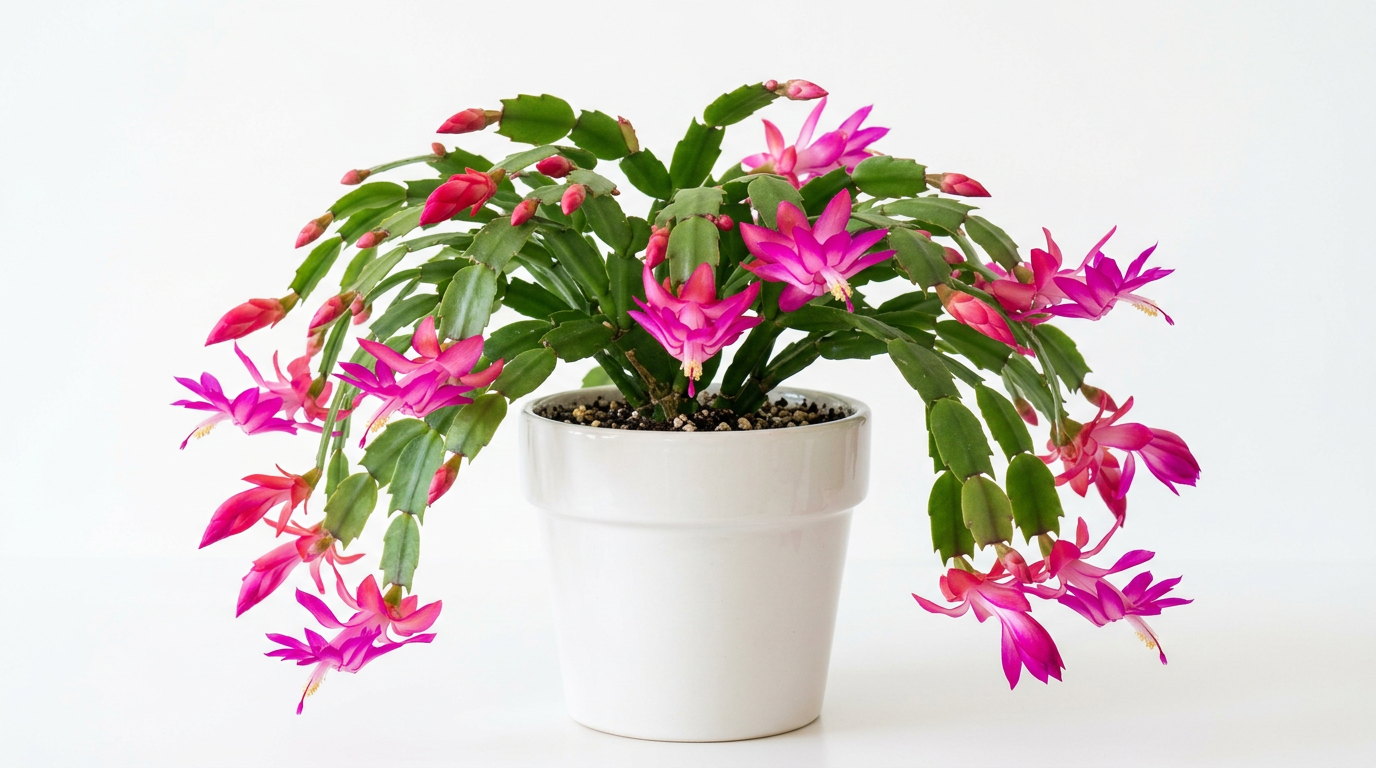
Christmas Cactus
EasySchlumbergera bridgessii
Christmas cacti are long-lived holiday bloomers that produce vivid tubular flowers in red, pink, white, or purple each winter — and can live for decades with the right care.
Light
Bright indirect light
Water
Every 2–3 weeks
Humidity
Average (50–60%)
Temperature
65–75°F (18–24°C)
Toxicity
Non-toxic
Christmas cactus is a holiday favorite with serious staying power — these tropical beauties can live for decades, filling a windowsill with cascading stems and vivid tubular flowers every winter. Unlike the prickly desert cacti you might expect, Schlumbergera bridgessii is a soft, forgiving plant that rewards a little seasonal attention with one of the most satisfying blooms in the houseplant world.
Quick Care Overview
| Care Factor | Requirement |
|---|---|
| Light | Bright indirect light |
| Water | Every 2–3 weeks |
| Humidity | Average (50–60%) |
| Temperature | 65–75°F (18–24°C) |
| Soil | Well-draining cactus or orchid mix |
| Fertilizer | Monthly (spring through early fall); stop before bloom period |
| Toxicity | Non-toxic |
Light Requirements
Christmas cactus thrives in bright, indirect light year-round. A spot near an east- or north-facing window is ideal, keeping it out of the harsh midday sun that can scorch those flat, segmented stems. When you’re trying to trigger blooms in fall, light management becomes even more important — the plant needs long, uninterrupted dark periods to set buds.
- Low light: The plant will survive but growth slows significantly and blooming becomes unreliable or absent entirely.
- Bright indirect light: The sweet spot — lush, vigorous growth and reliable blooms each winter with the right seasonal cues.
- Direct sun: Scorches the flattened stem segments, turning them pale yellow or red; avoid especially in summer.
Watering
Despite the word “cactus” in its name, Christmas cactus is a tropical epiphyte from the humid forests of Brazil — not a desert plant. It needs more consistent moisture than its spiny cousins, though it still dislikes sitting in soggy soil. Water thoroughly every 2–3 weeks during active growth (spring through early fall), allowing the top inch of soil to dry out between waterings. When the plant is actively budding and blooming, water slightly more often to keep the soil evenly moist — dry stress at this stage can cause bud drop.
Signs of overwatering: Mushy or discolored stem segments, wilting despite wet soil, root rot smell from the pot.
Signs of underwatering: Shriveled or limp segments, dry and pulling away from the pot edges, slowed growth; buds may drop if drought stress hits during flowering.
Getting Christmas Cactus to Bloom
This is the question every Christmas cactus owner eventually asks — and the answer is wonderfully predictable once you understand the plant’s cues. Christmas cactus is a photoperiod plant, meaning it needs a combination of cooler temperatures and long dark nights to trigger bud formation.
Starting in mid-October, give your plant:
- 14+ hours of complete darkness per night for 6–8 weeks. A spare bedroom, closet, or any room that stays dark from evening to morning works well — just make sure no artificial light sneaks in, even from a street lamp or hallway.
- Cooler temperatures of 50–60°F (10–15°C) during this same period. A cool room, unheated garage, or covered porch (frost-free) is ideal.
Once you see buds forming — usually by late November — bring the plant back to its normal bright spot and resume regular watering. From this point on, do not move it. Christmas cactus is notorious for dropping buds when disturbed after they’ve set, so find a spot and leave it there through blooming.
Popular Varieties
The “holiday cactus” group includes three closely related plants that are often mislabeled at garden centers:
- Christmas cactus (Schlumbergera bridgessii): Smooth, rounded stem segments; blooms December–January. The true Christmas cactus.
- Thanksgiving cactus (Schlumbergera truncata): Pointed, claw-like teeth along segment edges; blooms earlier, typically November. The most common one sold in stores.
- Easter cactus (Hatiora gaertneri): Star-shaped flowers with more rounded segments; blooms in spring. Requires slightly different care and a longer dormancy trigger.
Care is nearly identical for all three — the main difference is timing. If yours blooms in late November, it’s almost certainly a Thanksgiving cactus regardless of the label.
Humidity and Temperature
Christmas cactus is comfortable in the same conditions most people keep their homes — it prefers temperatures of 65–75°F (18–24°C) during its active growing season. It appreciates humidity in the 50–60% range, which is on the higher end of average indoor humidity. If your home runs dry in winter (common with forced-air heating), a pebble tray with water beneath the pot or occasional misting will help keep the stems plump and healthy. Avoid placing the plant near heating vents, drafty windows, or exterior doors — sudden temperature swings can cause bud drop.
Soil and Potting
A well-draining mix is essential. A commercial cactus and succulent mix blended 50/50 with perlite or orchid bark works beautifully, providing the airy, slightly moisture-retentive environment this tropical epiphyte prefers. Avoid standard potting soil on its own — it holds too much moisture and increases the risk of root rot.
Christmas cactus likes to be slightly root-bound and doesn’t need frequent repotting. Repot every 3–4 years in spring, moving up just one pot size. Choose a pot with drainage holes — non-negotiable for this plant.
Propagation
Christmas cactus is one of the easiest houseplants to propagate, and sharing cuttings is a holiday tradition in many households.
- Choose a healthy stem and twist off a segment of 2–3 joined sections at a natural joint — no cutting tool needed.
- Set the cutting aside in a dry spot for 1–2 hours to let the cut end callous slightly.
- Plant the cutting about 1 inch deep in barely moist cactus mix.
- Place in bright indirect light and keep the soil lightly moist — not wet.
- Roots develop in 2–4 weeks. You’ll know it’s rooted when you feel gentle resistance if you give it a very light tug.
- Resume normal care once the cutting is established.
Cuttings taken in spring or early summer root most readily, but propagation works year-round.
Fertilizing
Feed Christmas cactus monthly from spring through early fall with a balanced liquid fertilizer (10-10-10 or similar) diluted to half strength. This supports healthy stem growth and builds energy reserves for blooming. Stop fertilizing in September when you begin the dormancy period to trigger blooms — feeding during this window can delay or prevent bud set. Resume fertilizing after the blooming period ends, typically in late winter or early spring.
Common Problems
Bud drop: The most heartbreaking Christmas cactus problem. Caused by moving the plant after buds set, low humidity, drafts, overwatering, or underwatering. Once buds form, find a spot and don’t touch it.
Yellowing or pale stem segments: Usually too much direct sun or overwatering. Move to a shadier spot and let the soil dry more thoroughly between waterings.
Limp, shriveled stems with dry soil: Classic underwatering. Give the plant a thorough soak and it should perk up within a day.
Limp, mushy stems despite wet soil: Overwatering leading to root rot. Remove from the pot, trim any black or mushy roots, let dry out, and repot in fresh mix.
Failure to bloom: The plant needs its dark period. If it’s in a room with lights on in the evenings, it won’t set buds. Move it to a dark, cool location for 6–8 weeks in October and November.
Scale or mealybugs: These sap-sucking insects occasionally appear as white cottony masses or brown bumps on the stems. Treat with isopropyl alcohol on a cotton swab for small infestations, or a neem oil spray for heavier ones.
Is Christmas Cactus Toxic?
Christmas cactus is non-toxic and considered safe for cats, dogs, and humans. It’s one of the few holiday plants you can display with complete peace of mind in a pet-friendly home — unlike poinsettias or amaryllis, which require more caution. That said, eating large quantities of any plant material can cause mild digestive upset in pets, so it’s still worth keeping out of reach of enthusiastic chewers.
With a little seasonal attention and a dark corner in October, a Christmas cactus will reward you with decades of brilliant holiday color — a living heirloom you can pass cuttings of to friends and family for years to come.